
Your child needs braces, or might soon, and you want to know what you are actually signing up for. Here is what treatment involves at each stage, what the appliances do, how often you will be in the chair and what changes at home.
If your question is when to bring your child in for the first time, that one has its own answer. Our guide on when a child should first see an orthodontist covers the age seven evaluation and what it does and does not mean. This post picks up after that, once treatment is actually on the table.
Phase 1 and Phase 2, Explained
You will hear these two terms constantly. Here is what they mean in plain language.
Phase 1, or interceptive treatment, usually happens between ages six and ten, while your child still has a mix of baby and permanent teeth. The goal is to guide jaw growth, create space for incoming teeth and correct bite problems while everything is still developing.
Common Phase 1 tools include:
- Palatal expanders to widen a narrow upper jaw
- Partial braces to correct specific bite problems
- Habit appliances to stop thumb sucking or tongue thrusting
- Space maintainers to hold room for adult teeth
Phase 2, or comprehensive treatment, typically begins once most permanent teeth have come in, often around ages eleven to thirteen. This is the stage most parents picture: full braces or aligners to align the teeth and finish the bite.
Not every child needs Phase 1. Plenty go straight to Phase 2 with excellent results. When Dr. Lauren does recommend an early phase, it is because acting while the jaw is still growing makes the second round shorter and simpler.
The Appliances and What Each One Does
Brackets are smaller than the ones you remember, wires are smoother and visits are shorter. Here is what your child might end up with:
- Metal and colorful braces. Time tested and effective, and genuinely fun for kids who get to pick new band colors at every visit.
- Clear braces. Ceramic brackets that blend with natural enamel. A better fit for older kids and teens who are self-conscious about the look.
- Palatal expanders. These gently widen a narrow upper jaw to make room and improve how the bite comes together.
- Habit appliances. These help stop thumb sucking or tongue thrusting that is pushing teeth out of position. You can see the full range on our treatments page.
- Retainers. These hold everything in place once active treatment ends, and they are not optional.
What Happens on Placement Day
Plan on one to two hours. Dr. Lauren Van Gemert bonds each bracket to the teeth, attaches the archwire and, with metal braces, lets your child choose their band colors. It is not painful, just long, so bring something for them to listen to.
You will leave with care instructions and a rundown of what to expect over the first few days. Most kids are fine by day three.
Visits Every Four to Eight Weeks
After placement, your child comes in every four to eight weeks for an adjustment. Dr. Lauren tightens the wires, checks progress and swaps the band colors if they want a change. These visits usually run under thirty minutes.
Most children finish treatment in twelve to twenty-four months. Phase 1 is usually shorter, often under a year, since it is solving one specific problem rather than finishing the whole bite.
What Changes at Home
Less than parents expect, but a few things do shift:
- Soreness for a few days. After placement and after each adjustment. Soft foods and an over-the-counter pain reliever handle it.
- Foods that come off the menu. Sticky things like caramel and taffy pull brackets off. Hard things like ice and popcorn kernels break wires. Chewy things like bagels need care.
- Brushing takes longer. Getting around brackets is fiddly at first and becomes automatic within a couple of weeks.
- Occasional breakages. A loose bracket or a poking wire is normal, not an emergency. Call the office and we will fit them in.
Sports and Instruments
Both are fine. A custom mouthguard protects braces during contact sports and is worth getting fitted properly rather than picking one up at a sporting goods store. Kids who play wind instruments usually need a week or two to adjust their embouchure, then carry on as normal.
When Aligners Work for a Younger Child
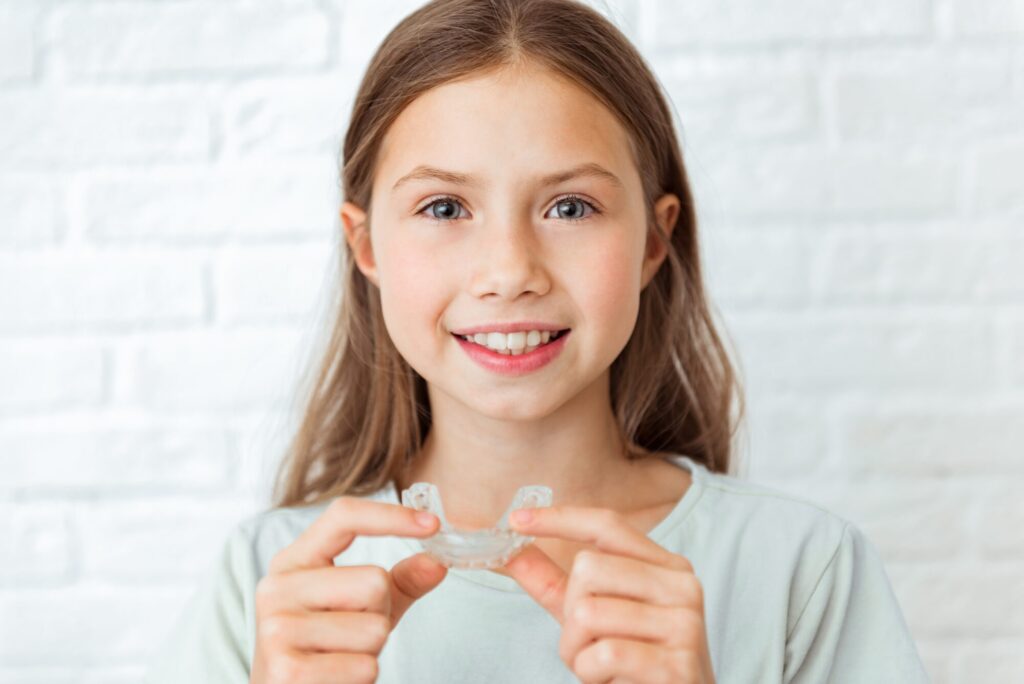
Aligners are not just a teenager option anymore. Invisalign First is designed for children roughly ages seven to ten and can handle arch expansion, crowding and spacing during Phase 1, with trays that come out for meals and brushing.
The catch is compliance. Trays only work if they are worn twenty to twenty-two hours a day, and that is a real ask for a younger child. Dr. Lauren will tell you honestly whether your particular kid is likely to manage it. Our Invisalign and clear aligners page goes through the whole process in detail.
The Thing Parents Get Wrong Most Often
Waiting for every baby tooth to fall out before doing anything. It feels sensible, and it costs you the window where the jaw is still growing and easiest to guide. By the time the last baby tooth is gone, some corrections that would have been simple now need a longer, more involved plan.
This is why the early check matters even when nothing gets done at it. Most of those visits end with Dr. Lauren saying come back in a year, and that is a good outcome.
Frequently Asked Questions
What is the difference between a pediatric dentist and an orthodontist?
A pediatric dentist handles your child’s general oral health, cleanings and cavity care. An orthodontist completes a two to three year residency after dental school focused specifically on tooth movement, bite alignment and jaw development. Most children see both.
How long does treatment usually take?
Most children finish in twelve to twenty-four months, depending on complexity. Phase 1 is typically shorter, often under a year. Dr. Lauren gives you an estimate at the first visit.
Does insurance cover children’s braces?
Many dental plans include orthodontic coverage for children, though limits and waiting periods vary. Our team verifies your specific benefits and walks you through what is covered before treatment begins.
Are aligners a good option for kids?
They can be, for children who will actually wear them consistently. Younger kids often do better with braces or an appliance built for their stage of growth, since nothing about it depends on them remembering.
Do braces hurt?
There is soreness for a few days after placement and after adjustments. Modern brackets and lighter wires are gentler than older systems, and the tenderness fades quickly.
Can my child play sports or a musical instrument with braces?
Yes to both. A custom mouthguard protects the braces during sports, and most kids adjust to wind instruments within a couple of weeks.
Ready to Get Started?
We treat every age from young children through adults, and Dr. Lauren will tell you plainly whether your child needs anything right now or whether the answer is to wait and watch. If your child is closer to their teens, our guide to choosing between braces and Invisalign for teens is the better starting point.
Book a free consultation at our Spokane office. No referral is necessary and there is no pressure to decide anything on the day.